
The PROCAN-B+ study: Early diagnosis of PROstate CANcer for Black men
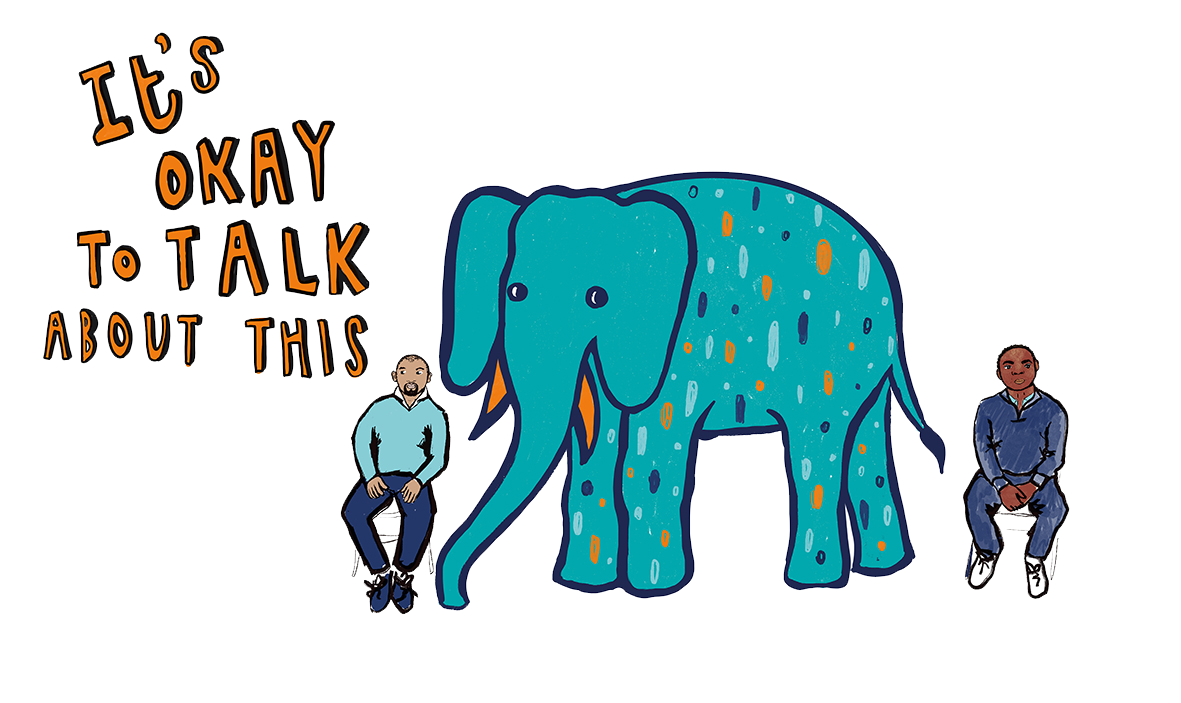
The PROCAN-B+ study, funded by Prostate Cancer Research, builds on the PROCAN-B study.
PROCAN-B+ builds on our work with Black men to improve understanding of prostate cancer and support informed decisions about testing.
We know that Black men are twice as likely to develop prostate cancer, and twice as likely to die from it, compared to White men. That’s why it’s so important for Black men to be aware of the risk of prostate cancer. These unfair and avoidable differences are known as health inequities.
That’s why we are so delighted that we will be able to continue the work we started in the PROCAN-B+ study.
Study duration: March 2026–August 2028

Building on PROCAN-B
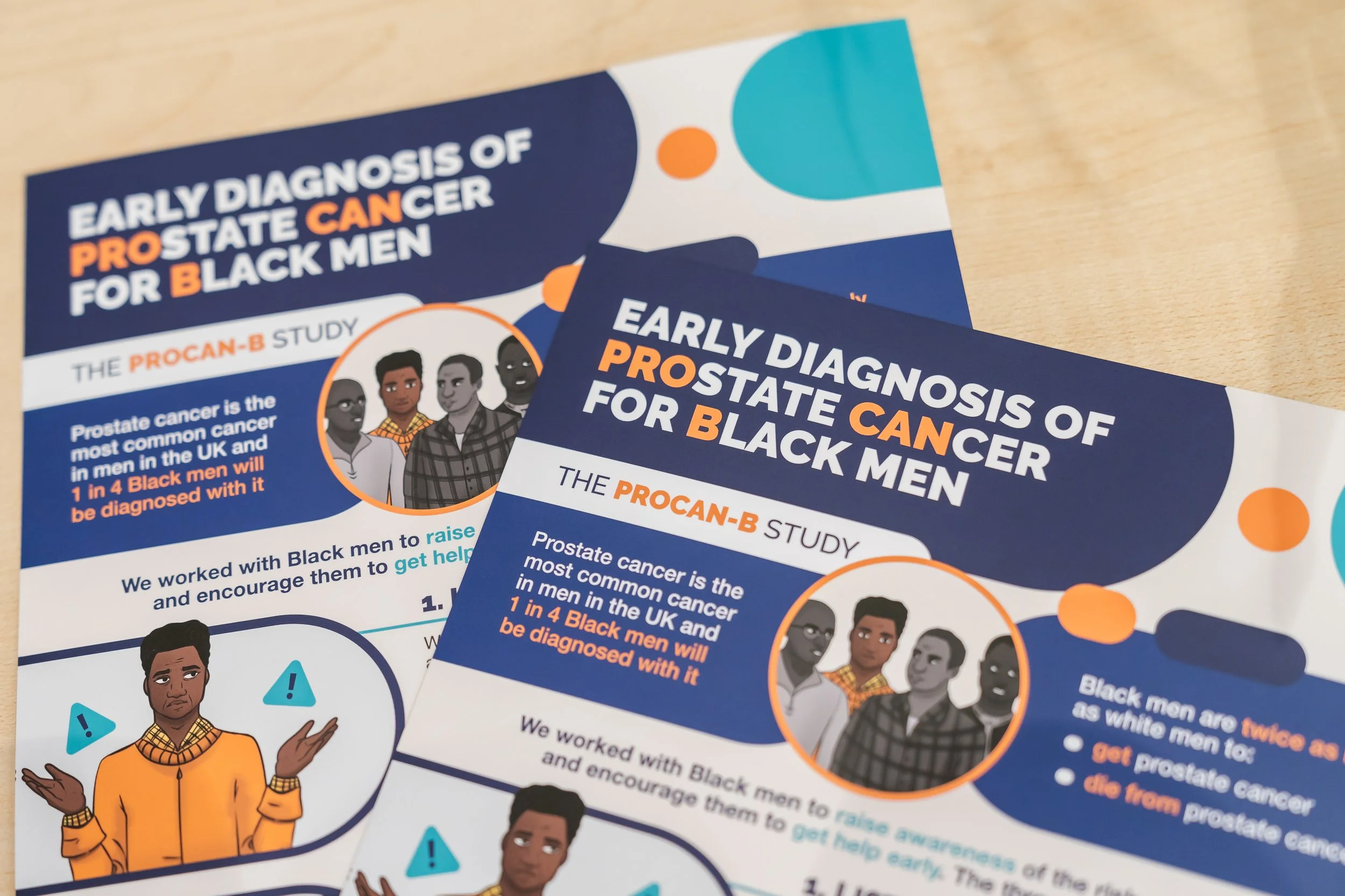
In the original PROCAN-B study, we worked with Black men to develop a community workshop led by trained peer facilitators and a Black GP. The workshop provided information about prostate cancer, personal risk and the benefits and limitations of PSA testing, with opportunities to ask questions and share experiences.
Our initial findings were encouraging: men’s knowledge improved, alongside changes in some beliefs about prostate cancer and testing. We are now taking this work further through PROCAN-B+.
What will PROCAN-B+ do?
PROCAN-B+ will explore whether the workshop helps Black men feel more confident about making informed decisions about prostate cancer testing and discussing their options with a doctor.
We aim to recruit 330 Black men aged 45 and over across North East England, London and Scotland.
Participants will be randomly allocated to one of two groups: one will attend the workshop soon after joining the study, and the other will attend approximately six months later. This will help us understand what difference the workshop makes.

What does taking part involve?
Participants will be invited to:
Attend a two-hour community workshop led by trained peer facilitators and a Black GP.
Complete questionnaires when they join the study, after the workshop and during follow-up over six months.
Tell us about any discussions with a doctor and any PSA testing during the study.
We will also ask permission to contact participants’ GP practices to confirm whether they have had a PSA test. Participants can decline this part and still take part in the study.
Some participants will be invited to an interview or group discussion to share their experiences and help us understand how the workshops could be offered more widely.
This is what the two-hour workshop looks like:
Led by peer-facilitators
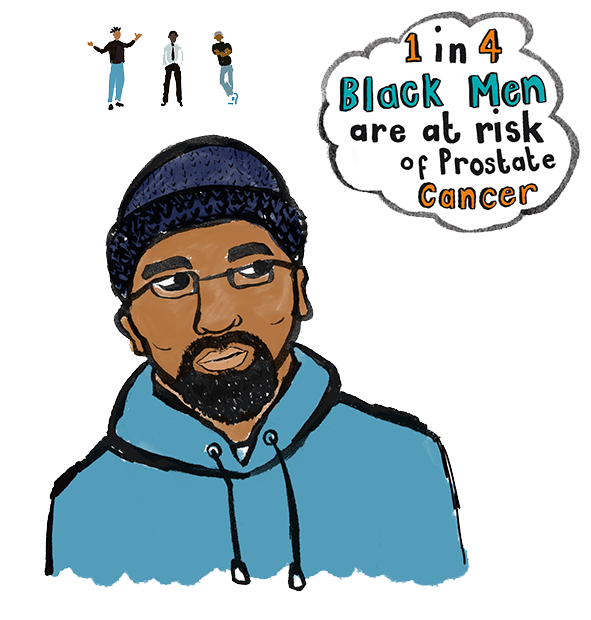
1. Peer-led discussion about challenges to prostate health check
2. Health education with Q&A led by a Black GP
3. Testimonials from community members discussing prostate cancer (videos)
4. Activities to overcome challenges when accessing healthcare and questions to ask the GP
5. Staying healthy and looking after one’s health for the family (video)
6. Religious perspective from religious leaders (videos)
7. Food, music and time to connect
Working with communities
Community partners and Black men are central to PROCAN-B+. Together, we will explore how the workshops work in different settings and what would be needed to make them available more widely.
Supporting informed choices
Having a PSA test is a personal decision. The workshop aims to provide clear, balanced information and space for discussion, so that men can make a choice that is right for them.
Are you interested in taking part?
Please contact procanbm@sunderland.ac.uk
You can read more here about what would be involved for you
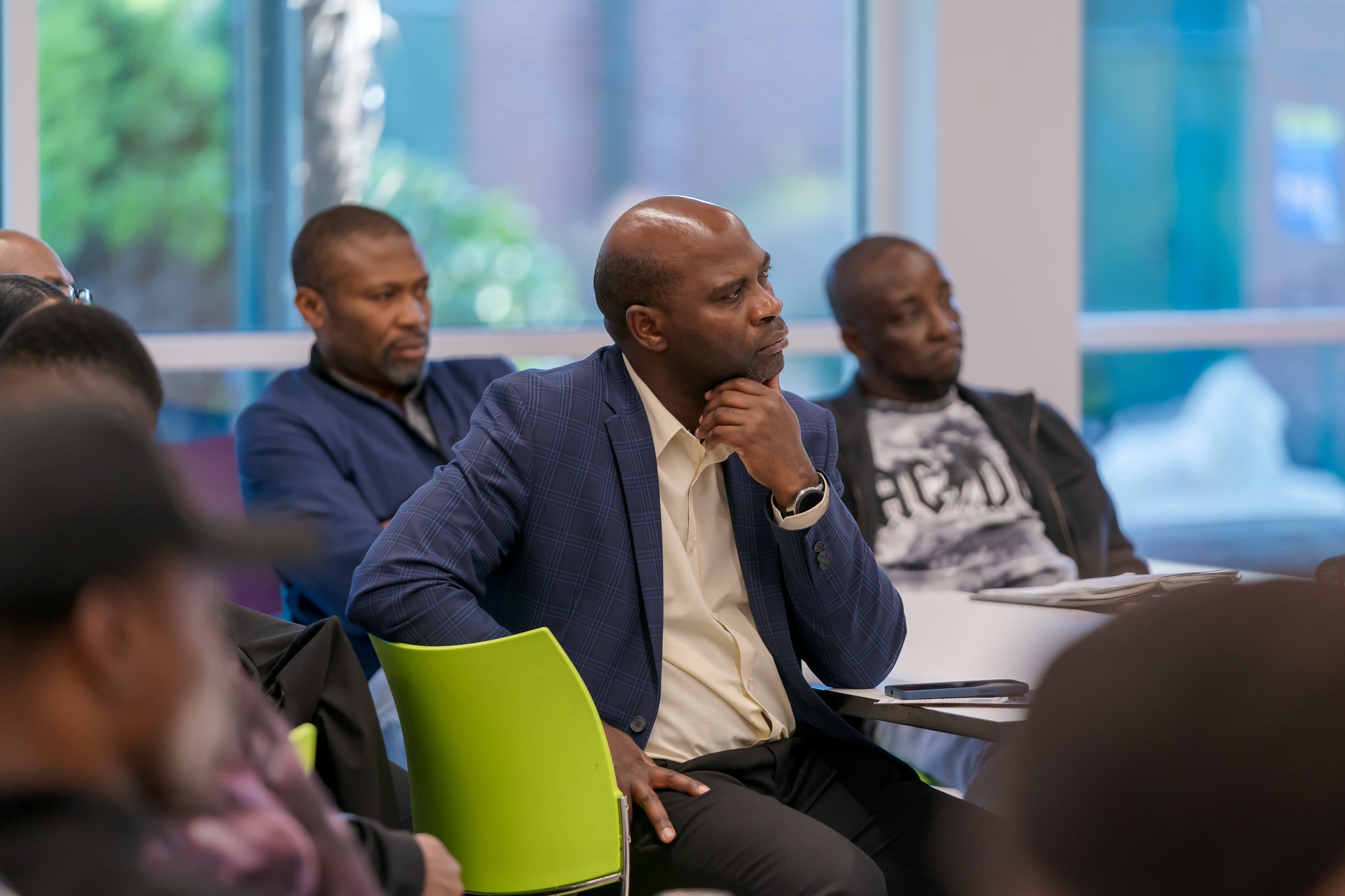
In the photo: Mr John Kabuye. Photo: David James Wood Photographer.
PROCAN-B+ team
Project Lead, Professor in Public Health for Medicine, School of Medicine, University of Sunderland
Mr Tolase Jaiyeoba
Community Recruitment Lead, London
School of Medicine, University of Sunderland
Co-Investigator, Senior Research Fellow in Cancer Diagnostics and Lecturer in Public Health, University of Exeter
Research Associate, School of Medicine, University of Sunderland
Mr Olasunkami Adebowale
Community Recruitment Lead, Leeds
School of Medicine, University of Sunderland
Dr Oluwole Ogynleye
Co-Investigator, GP, NHS Scotland
Mr Moses Apiliga
Community Co-Lead
Mr Nathan Mwesigwa
Community Recruitment Lead, Glasgow
School of Medicine, University of Sunderland
Co-Investigator, Professor of Biostatistics, Professor of Clinical Trial Biostatistics (Robertson Centre for Biostatistics), University of Glasgow
Co-Investigator, Professor of Behavioural Medicine, University College London
Mr John Kabuye
Co-Investigator, Founder of Ubuntu Multicultural Centre, Councillor Middlesbrough Council
Co-Lead, Professor of Behavioural Science and Health, School of Health and Wellbeing, University of Glasgow
Mr Ryan Swiers
Co-Investigator, Deputy Director of Public Health, Sunderland City Council
Co-Investigator, Lecturer in Health Psychology/Behavioural Sciences related to Dentistry, Dental School, University of Glasgow
Co-Investigator, Senior Research Fellow, University College London
Co-Investigator, Dean of Medicine and Prof of General Practice and Primary Care, University of Waikato
Co-Investigator, Consultant Urological Surgeon, University College London Hospitals NHS Foundation Trust